On this page
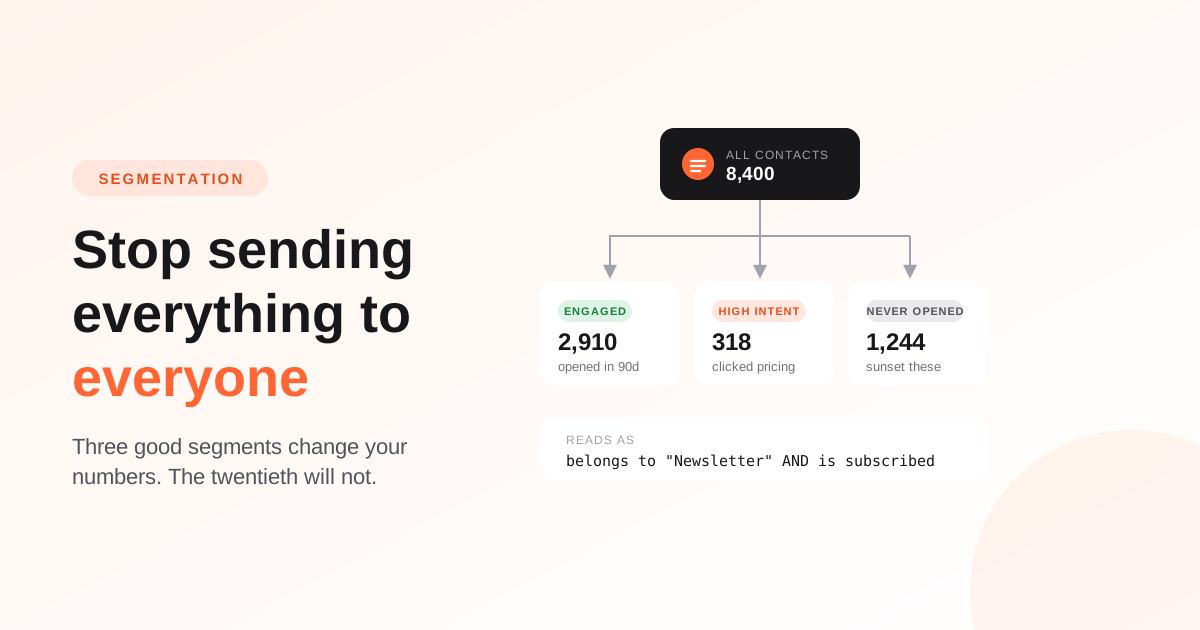
Most people arrive at segmentation after the same experience: a campaign goes to everyone, the open rate is mediocre, unsubscribes tick up, and it is obvious that a good chunk of the list had no reason to receive that message. Segmentation is simply the decision to stop sending everything to everyone.
It is also easy to overdo. Thirty overlapping segments that nobody maintains are worse than three that reflect real differences in what people want. This guide covers the distinction that trips people up first, the handful of segments that earn their keep, and how to know whether any of it is working.
Lists and segments are not the same thing
The two get used interchangeably and behave completely differently, which causes a specific kind of confusion later.
- A list is membership. Someone joins it and stays until they leave or unsubscribe. It usually reflects where they came from: the newsletter form, a webinar, an ebook download. Membership is a fact about the past.
- A segment is a rule. It is evaluated against your contacts, so membership changes on its own as people behave differently. "Opened something in the last 30 days" has different members today than it did last month, without anyone editing anything.
The practical consequence: use lists for how someone arrived, and segments for what is true about them now. A contact belongs to the "Ebook" list forever, because they did download the ebook. Whether they belong to "engaged in the last 90 days" is not your decision to make — it is a fact you look up.
Six segments worth building first
Start here. These cover most of the value, and none of them requires data you do not already have.
1. Engaged contacts
Opened or clicked anything in the last 90 days. This is the most valuable segment you will build, and not only for targeting: it is what you send to when you need to protect your sender reputation, warm a new domain, or recover from a deliverability problem.
2. Never engaged
Subscribed more than 60 days ago and has never opened anything. These people are dead weight that actively damages your placement. They deserve one re-permission email, then removal from regular sending.
3. Recent signups
Joined in the last 14 days. New subscribers behave differently: they are still deciding whether you were worth the address. Keeping them out of your regular promotional sends while a welcome sequence runs prevents the jarring experience of receiving a discount code before the introduction.
4. High intent
Clicked a pricing or product link in the last 30 days. Small, and worth more than the rest combined. A short, specific follow-up to this segment usually outperforms anything you send to the whole list.
5. Customers, separated from prospects
Nothing erodes trust faster than sending a customer an offer to become a customer. If you track purchases or plan status as a contact property, this segment is trivial to build and prevents a whole category of embarrassing mistakes.
6. Source-based
People who came in through a specific lead magnet already told you what they care about. Someone who downloaded a guide about deliverability has announced a topic — treating them identically to a general newsletter signup wastes the clearest signal you have.
Writing rules that do what you meant
Two mistakes account for most segments that quietly return the wrong people.
The first is mixing AND with OR without deciding which binds tighter. "Subscribed to the newsletter AND opened recently OR clicked recently" can mean two different things, and only one of them is what you wanted. Group the conditions explicitly rather than relying on the order you typed them.
The second is forgetting the subscription state. A segment built purely on behaviour will happily include people who unsubscribed last week. Add an explicit "is subscribed" condition unless you have a specific reason not to.
One more habit worth forming: check the matching count before you save. A segment that returns zero contacts almost always means a rule is inverted or a list reference is wrong, and it is much cheaper to notice that now than after a campaign sends to nobody.
Segments as automation triggers
Segments get considerably more useful when they stop being a filter you apply manually and start being an event. Entering a segment is a trigger: the moment someone becomes "high intent", a short follow-up can start on its own.
That turns a static rule into a behavioural sequence. Someone clicks the pricing link, enters the segment, and receives a case study two days later without anyone noticing or deciding. Our guide to building a nurturing sequence covers how to structure what happens next.
How to tell whether a segment is working
A segment justifies itself when the mail it receives performs better than the same mail sent to everyone. Compare against your own baseline rather than published industry averages, which are aggregated across wildly different businesses and tell you very little.
- Click rate against the all-contacts baseline. If a segment does not beat it, the segment is not capturing a real difference.
- Unsubscribe rate. A well-aimed message produces fewer unsubscribes, not just more clicks. A segment that lifts clicks while also lifting unsubscribes is usually just a louder subject line.
- Size over time. An engaged segment that keeps shrinking is telling you something about your content, not about your rules.
Segmentation is one of those disciplines where the returns arrive early and then flatten. Three good segments will change your numbers. The twentieth will not. Build the ones that map to genuine differences in what people want, keep the rules simple enough to explain out loud, and spend the time you save on the emails themselves.
Frequently asked questions
What is the difference between a list and a segment?
A list is a group a contact belongs to until they leave — usually reflecting where they signed up. A segment is a rule evaluated against your contacts, so its members change automatically as behaviour and properties change. Use lists for how someone arrived and segments for what is true about them now.
How many segments should I have?
Fewer than you think. Three to six well-chosen segments cover most of the value for a typical list. Each additional segment adds maintenance and overlap, and segments nobody maintains produce worse targeting than no segmentation at all.
Does segmentation actually improve open rates?
It reliably improves click rates and reduces unsubscribes, which matter more. Open rates have become unreliable since image-proxy privacy features started loading tracking pixels automatically, so judge a segment by clicks and by how few people leave.
Should I segment by demographics or by behaviour?
Behaviour first, almost always. What someone clicked last month predicts what they will do next far better than their job title or country. Demographic data is useful for personalising content once behavioural segmentation is already in place.
How often should I review my segments?
Once a quarter is enough for most senders. Check that each segment still returns a plausible number of contacts, that none has quietly emptied because of a renamed list, and that each one is still receiving mail different from what everyone else gets.