On this page
- 1. AI writes the first draft; people own the brief and the approval
- 2. AI assistants start operating your email tools
- 3. The inbox reads your email before your subscriber does
- 4. Authentication stops being optional
- 5. Open rates retire as the headline metric
- 6. First-party and zero-party data become the targeting layer
- 7. List hygiene becomes a growth strategy
- 8. Accessible, well-built email becomes the baseline
- How Send Tim is built for where email is heading
- A short checklist for 2027
Email has been declared dead roughly once a year for two decades, and it keeps outliving the channels that were supposed to replace it. What does change, and quickly, is how email marketing works: who writes the message, who reads it first, what counts as proof it worked, and what mailbox providers demand before they will deliver it at all.
Here are the eight shifts we think matter most going into 2027, what is driving each one, and what to do about it now.
1. AI writes the first draft; people own the brief and the approval
Generating email copy with AI is no longer novel; it is the default starting point for many teams. The quality gap between teams is moving elsewhere: to the brief. A model given "write a newsletter" produces something generic. A model given the audience, the offer, the brand voice, the claims you are allowed to make and the ones you are not, produces something close to publishable.
The winning workflow in 2027 looks like this: a person writes a precise brief, AI produces several genuinely different drafts and subject lines, and a person edits and approves. Tools that keep AI output as structured, editable copy, rather than a finished blob of HTML, make the editing step far easier.
2. AI assistants start operating your email tools
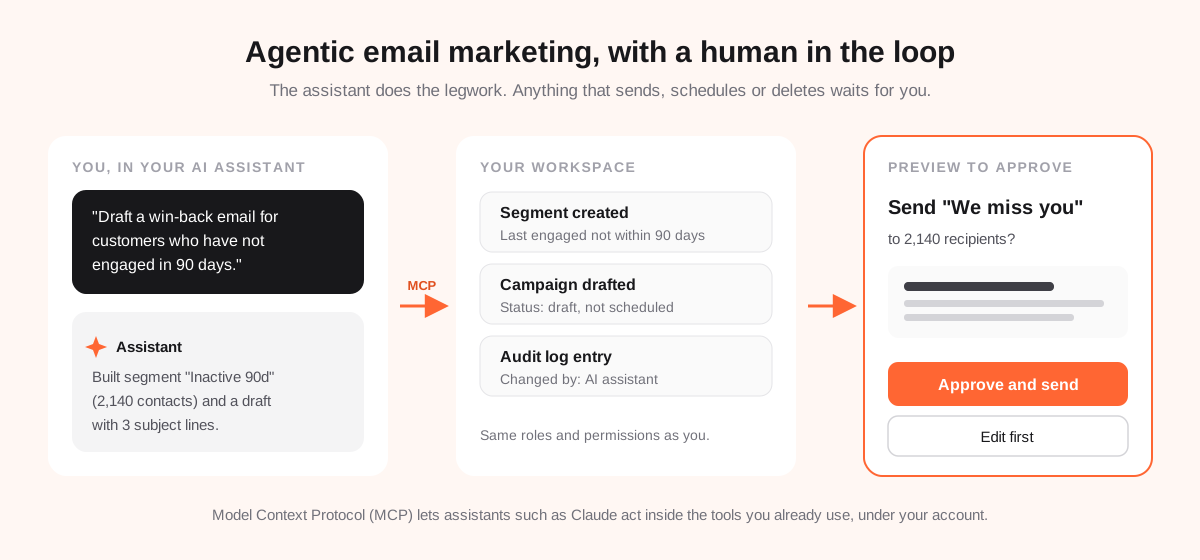
The next step after AI that writes is AI that acts. With the Model Context Protocol (MCP), an open standard introduced by Anthropic in late 2024, assistants such as Claude can connect directly to the tools you already use. For email, that means asking in plain language: "Which campaigns drove the most clicks this quarter?" or "Build a segment of customers who have not engaged in 90 days and draft a win-back email for them."
The important design question is not whether an assistant can do this, but what it is allowed to do without asking. The sensible pattern is clear: read and draft freely, but return anything that sends, schedules or deletes as a preview for a person to approve, with every change recorded in an audit log.
3. The inbox reads your email before your subscriber does
Mailbox providers now put their own AI between you and your reader. Gmail offers Gemini-powered summaries of messages and threads, and Apple Mail can summarize messages, surface priority messages and sort mail into categories. For a growing share of readers, the first thing they see from you is a machine-written summary, not your carefully crafted preview text.
- Lead with the point. If the first two sentences carry the offer or the news, the summary will too.
- Use real text, clear headings and one call to action. Summarizers and categorizers read structure; text baked into images is invisible to them.
- Keep subject lines honest. A subject line that the body does not support reads badly next to an accurate summary.
4. Authentication stops being optional
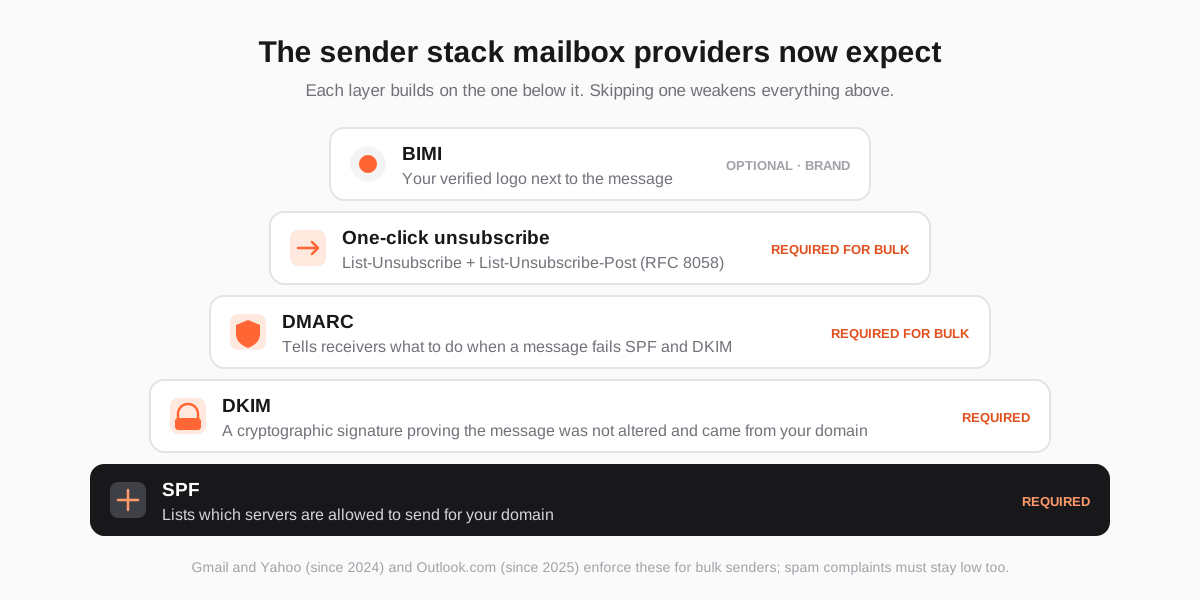
Since February 2024, Gmail and Yahoo have required bulk senders to authenticate with SPF and DKIM, publish a DMARC policy, support one-click unsubscribe and keep spam complaint rates low; Google asks bulk senders to stay below 0.3% as reported in Postmaster Tools. Microsoft followed for Outlook.com consumer addresses in May 2025. Enforcement has tightened since: messages that do not comply are increasingly rejected rather than merely sent to spam.
The practical consequence is that sending from a shared or unauthenticated domain is no longer a shortcut; it is a deliverability problem waiting to happen. The one layer that is still optional is BIMI, which displays your verified logo next to your messages in supporting inboxes. It requires DMARC at enforcement, which makes it a useful forcing function for getting the rest right.
5. Open rates retire as the headline metric
Apple's Mail Privacy Protection, introduced in 2021, preloads images, including tracking pixels, through Apple's servers. Many opens are therefore recorded whether or not a person read the email. Other image proxies have similar effects. Open rate still helps spot broad trends, but it can no longer carry decisions on its own.
The metrics that replace it are closer to business outcomes: clicks, conversions and revenue per email, replies, and the negative signals, unsubscribes and complaints, which mailbox providers watch closely. Subject line tests, automation branches and "inactive" definitions should all move to clicks where possible.
6. First-party and zero-party data become the targeting layer
As third-party tracking erodes, the data subscribers give you directly becomes the most valuable input you have. Zero-party data, what people explicitly tell you through forms, quizzes and preference centers, is both accurate and consented. First-party data, what they do with your emails and on your site, fills in the rest.
The teams that benefit most are those that ask a small number of useful questions at the right moments, store the answers as structured fields and actually use them in segments. Asking what someone wants to hear about, and then respecting it, is also the most effective way to keep unsubscribes down. For how to collect this data at signup without hurting conversion, see Email Lead Generation: 9 Signup Form Tactics.
7. List hygiene becomes a growth strategy
For years, list size was the number marketers reported upward. The stricter complaint thresholds and engagement-based filtering of recent years have flipped that incentive: a smaller list of people who open and click will now often reach more inboxes, and earn more, than a large list padded with contacts who never respond.
- Suppress automatically: hard bounces and complaints should never be mailed again, whatever the import says.
- Define dormancy in one place, for example no engagement in 90 days, and use the same definition everywhere.
- Re-permission, then sunset: one honest "still interested?" email, then stop regular sends to those who ignore it.
We describe how to automate this as the last step of a welcome sequence in Lead Nurturing Emails: How to Build a Welcome Sequence That Converts.
8. Accessible, well-built email becomes the baseline
The European Accessibility Act, which has applied since June 2025, has pushed accessibility up the agenda for many businesses selling to consumers in the EU, and email is part of that experience. Accessibility and deliverability also happen to reward the same habits, so the effort pays off twice.
- Real text rather than text in images, and meaningful alt text on the images you do use.
- Sufficient color contrast and readable font sizes, especially on mobile.
- Descriptive link text instead of "click here".
- A plain-text version for clients and assistive technology that prefer it.
- Layouts that survive dark mode and narrow screens.
How Send Tim is built for where email is heading
We built Send Tim around these shifts rather than bolting them on later:
- AI campaign drafts from a structured brief, returned as editable copy with at least three subject lines and a plain-text version.
- A remote MCP server, so Claude and other assistants can work in your workspace with your permissions. Sending, scheduling and deleting always come back for your approval.
- Domain authentication with generated DKIM, SPF and DMARC records; live sending is refused until your domain is verified.
- One-click unsubscribe (RFC 8058) on every message, with automatic suppression of bounces and complaints.
- Analytics that label opens as approximate and put clicks, per-link performance, unsubscribes and complaints alongside them.
- Consent evidence stored per contact, and a preference page for subscribers.
A short checklist for 2027
- Send from your own authenticated domain, and move DMARC towards enforcement.
- Make one-click unsubscribe and automatic suppression non-negotiable.
- Replace open rate with clicks and conversions in reports, tests and automation branches.
- Write a reusable AI brief with your voice, claims and disclaimers.
- Decide what an AI assistant may do alone and what it must ask you about.
- Put the key message in the first two sentences of every email.
- Ask subscribers what they want, store it, and segment on it.
- Define dormancy once and sunset contacts who never engage.
None of these trends makes email harder for senders who respect their subscribers. They mostly make it harder for everyone else, which is good news if you are on the right side of them.
Frequently asked questions
Is email marketing still worth it in 2027?
Yes. Email remains one of the few channels you own outright, with no algorithm deciding whether your audience sees you. What has changed is the bar: authenticated sending, easy unsubscribes, low complaint rates and relevant content are now requirements rather than best practices.
Will AI replace email marketers?
AI is replacing the blank page, not the marketer. Drafting copy, building segments and pulling reports are increasingly automated, while deciding the strategy, writing the brief, checking claims and approving what gets sent remain human responsibilities.
What are the Gmail and Yahoo bulk sender requirements?
Since February 2024, bulk senders must authenticate with SPF and DKIM, publish a DMARC policy, align the From domain, support one-click unsubscribe and honor unsubscribes promptly, and keep spam complaint rates low (Google's threshold is 0.3%). Outlook.com introduced similar requirements for high-volume senders in May 2025.
What should replace open rate as the main email metric?
Click rate and conversions, supported by revenue per email where you can measure it, and by unsubscribe and complaint rates as health signals. Opens are still useful for spotting broad trends, but privacy features such as Apple Mail Privacy Protection make them unreliable for decisions.